11-24-2026, 12:31 AM
This was written by Ai from my discussions with it, basically it is my compiler to put together succinctly, my ramblings
Solving RotorWay Engine Cooling Properly — Boundary-Layer Scoops, Doghouse Fan & Reclaiming 10+ Horsepower
A good friend of mine, a helicopter instructor with thousands of hours and extensive time flying standard RotorWays, recently flew a ship fitted with my cooling system modifications. Even without touching the engine or fuel system, he immediately noticed how much stronger it felt than a stock RotorWay—purposely pulling it into a steep climb to see how it would clear a line of trees, and coming back genuinely amazed at the extra climb power.
That noticeable jump in performance comes simply from reclaiming the 10+ horsepower normally wasted driving the stock mechanical centrifugal cooling fan—while actually running cooler in the process.
Over the years, factory updates—such as increasing the pitch of the mechanical centrifugal fan and adding the 162F shroud ring to tighten tip clearance to 2–3 mm—were aimed at forcing more air through the radiator. In practice, pushing harder against radiator backpressure creates a low-pressure eye in the center of the centrifugal fan that actually sucks hot air back up through the middle of the radiator core (you can often see the telltale clean patch underneath the core where hot recirculating air scrubs through the oil-breather mist).
Replacing that mechanical fan with a three-part airflow system solves both cruise and hover cooling at the source:
- ~1" Boundary-Layer Radiator Scoops + Bottom Electric Puller Fan: External scoops stood off ~1 inch outside the fuselage boundary layer feed cool, undisturbed ambient air directly into a sealed plenum on top of the radiator. In cruise flight, positive ram air pushes downward through the core with zero recirculation and the bottom electric fan doesn't even turn on; in a hover, a thermostatically controlled electric puller fan under the radiator cycles on automatically to keep air moving downward.
- Dedicated NACA Oil Cooling: Two NACA scoops underneath the front of the fuselage feed ambient cooling air directly to the oil cooler, assisted by two 5-inch fans exhausting warm air cleanly out the back of the tub ahead of the exhaust system.
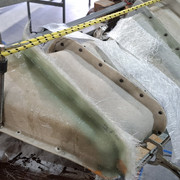
- 11-Inch Top Doghouse Extraction Fan: Cutting vents into the top doghouse flap and mounting an 11-inch electric extraction fan on the upper frame—triggered by a thermal sensor at the back of the engine—actively evacuates rising engine-bay heat during ground runs and hovers when forward airflow is zero. Once in forward flight, the front NACA scoops and the natural low-pressure zone directly beneath the main rotor hub take over and draw hot air out automatically.