| Welcome, Guest |
You have to register before you can post on our site.
|
| Online Users |
There are currently 33 online users.
» 0 Member(s) | 33 Guest(s)
|
| Latest Threads |
Shimming the rotor hub
Forum: Maintenance & Troubleshooting (162/A600)
Last Post: Homer Bell
5 hours ago
» Replies: 3
» Views: 86
|
162F for sale
Forum: Helicopters Marketplace
Last Post: Homer Bell
7 hours ago
» Replies: 7
» Views: 1,453
|
E36-8570 Talon Oil Temp S...
Forum: General Discussion
Last Post: Robin Scalzo
10-26-2026, 11:12 PM
» Replies: 0
» Views: 46
|
Fuel tank insulation
Forum: General Discussion
Last Post: Jared Hartzell
10-25-2026, 02:15 AM
» Replies: 6
» Views: 587
|
Pedals become stiff after...
Forum: Maintenance & Troubleshooting (162/A600)
Last Post: Homer Bell
10-23-2026, 12:22 PM
» Replies: 0
» Views: 72
|
tail rotor shaft drive in...
Forum: Modifications & Recommendations
Last Post: Graeme Smith
10-22-2026, 07:26 AM
» Replies: 33
» Views: 5,130
|
Grease Tool
Forum: General Discussion
Last Post: Lyle Swallows
10-22-2026, 04:54 AM
» Replies: 1
» Views: 123
|
I have a new rotorway MAI...
Forum: Helicopters Marketplace
Last Post: Homer Bell
10-19-2026, 12:24 AM
» Replies: 1
» Views: 219
|
162F spark plugs
Forum: General Discussion
Last Post: Lyle Swallows
10-01-2026, 02:46 AM
» Replies: 4
» Views: 795
|
The Digital Rotortach Sto...
Forum: Digilin LEDtechnics
Last Post: Lyle Swallows
09-27-2026, 07:58 PM
» Replies: 2
» Views: 292
|
|
|
| How safe are experimental helicopters? |
|
Posted by: Orv Neisingh - 08-18-2026, 06:39 PM - Forum: Mechanical Failures and Accidents
- No Replies
|
 |
I am often asked about the safety and reliability of the Rotorway helicopters that I fly around 400-500 hours a year. “Are they safe to fly?” “Safe”, does that mean that there is no risk if one flies an experimental helicopter? Does that mean that there is no risk in flying any helicopter?
A query of the NTSB accident database certainly would support that fact that accidents happen to all kinds of aircraft, both fixed and rotary wing machines. Are cars and motorcycles safe? Lets take it back further before the age of the internal combustion engine we could ask if horses are a safe way to get to point a to b. Many people are injured every year by horses.
In truth the human body is fragile and nearly anything we do has an element of risk. When I was 31 years old I had pretty much made it financially. I was in the process of installing the first wind farm in the windy hills of southern Solano County in California and president of a large wind farm company. I also owned a hot tub, spa, and solar store in Suisun California, numerous apartments and rental properties, and thought that I had it made for life. At 10pm on June 6, 1982, as I was leaving my office and driving home to my new custom home, an oncoming vehicle swerved into my path and struck my truck head-on.
I woke up on October 1 of 1984 pennyless and homeless. The head injury that I sustained in the head-on collision with the drunk teen-aged driver had caused my brain to be unable of recording memory for nearly two and a half years, during which time my business and investments evaporated. It was a long road to recovery but by the late 1980’s I was back in business and financially able to start shopping for my first Rotorway helicopter.
Since then I have accumulated over 15,000 hours in helicopters, (of those hours over 13,000 have been in Rotorway helicopters of varying models) and have piloted my own airplanes for over 2000 hours. During those over 16,000 hours of PIC time I have never been injured one time when a Safari main rotor blade de-laminated during takeoff. The only other “crash” that I have had was when, as a green pilot on a high density altitude day at max gross wt., I lost main rotor rpm on lift off and entered an LTE spin. I took out the tail rotor on my own ship as I set it down. That was an easy fix and within a week I was flying again.
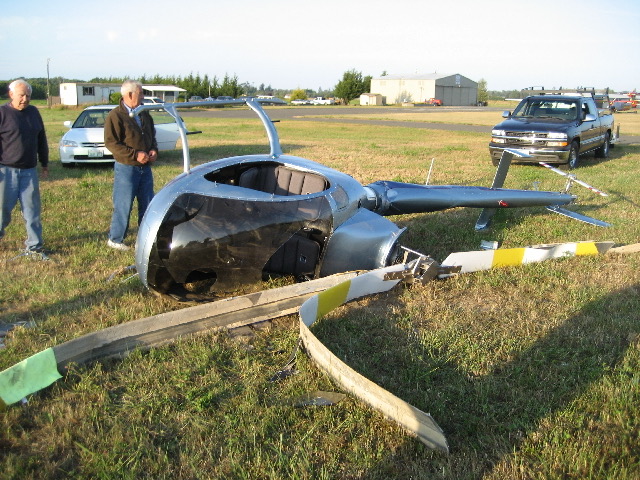
The below photo is of the Rotorway that had Safari main rotor blades installed and when the one blade delaminated it flipped us up side down causing the helicopter to initially land on the top of the rotor hub and then fall over onto its side.
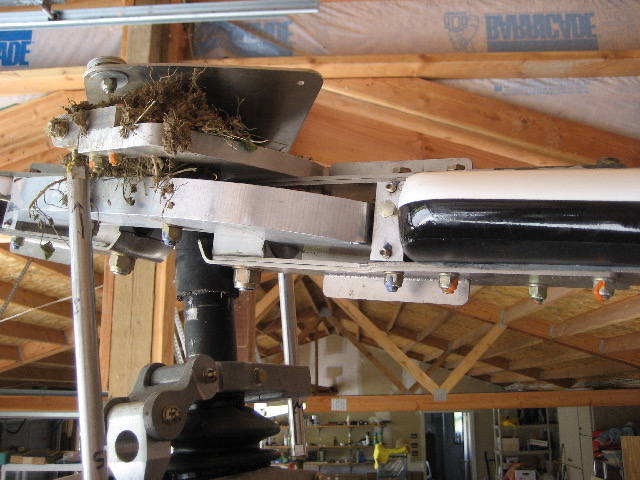
The below photo shows the sod stuck in the top of the rotor system from the initial ground contact.
Based solely upon my own personal experience, I could conclude that driving a vehicle on the roads exposed me to more risk than flying helicopters and airplanes. I had always thought that flying a medevac helicopter would be exciting and rewarding. In 2005 I was approached my Air Evac Lifeteam recruiters to become a medivac helicopter pilot flying the Bell 206 Longranger. I committed to fly for one year so in 2006 I divided my time between Rotorway instruction and medevac helicopter flights.
There were many times when the circumstances would put the helicopter and crew on the edge of any safety margins. I came closer to unseen wires at night while approaching or departing remote emergency scenes than I had ever flying Rotorway helicopters. I experienced wind sheer while departing from the 17[sup]th[/sup] story roof top of a hospital as the 30 kt winds whipped around the elevator enclosure near the helipads. I even had a construction crane swing its boom directly into the path of the helicopter when I was on final approach to the hospital rooftop helipad.
On one flight I was sprayed with a patient’s blood in-flight and it was of such a volume that it was running down the inside of the wind screen and covering my instruments and my uniform. During that year of flying medevac helicopters I was exposed to more risk than during any other period of my flying career.
Already this year there have been a number of medevac helicopter crashes, I can think of 4 off the top of my head, in which the pilots, crews, and patients were all killed. From my own experience I would have to conclude that medevac helicopter flying is the most risky flying that one can engage in.
Now let’s go back to the original question, “Is the Rotorway helicopter safe to fly?” Based upon my own experience I would have to conclude emphatically, “yes it is”. During my years of involvement with this great little helicopter I have experienced a number of failures caused by either poor design or poor workmanship.
The Rotorway helicopter has slowly evolved from a very basic one person underpowered hard to control ship to a reliable two place helicopter over its production history. There were many issues with the prior models that I have discussed in articles and on my web site accessed by the green button at the top of this page, many of which have been addressed on the new Talon that Rotorway is now producing.
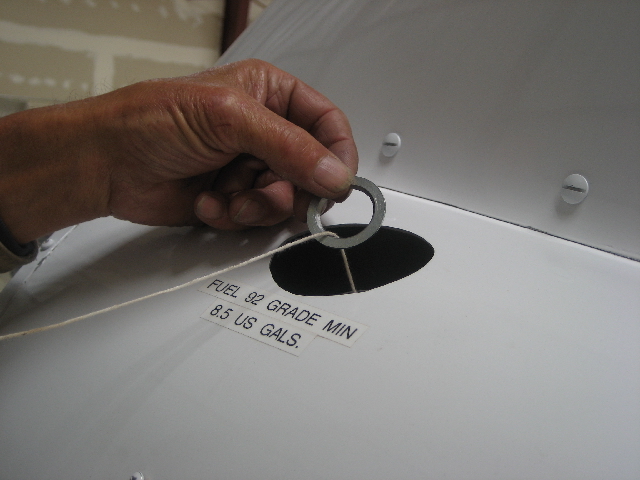
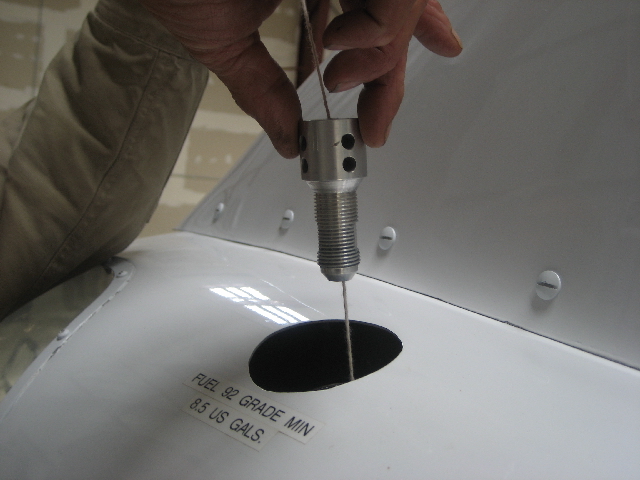
The fuel tank outlet fittings for the Talon are now incorporating the internal washer that I designed and offered to all builders over 15 years ago. The Fatal flaw in the overhead wiring (it is simple to fix if you have this model) of the 162F has been eliminated by the total redesign of the wiring system on the last year of the Talon.
At the time of this writing there have been over 20 fatalities involving medevac helicopters flown by highly trained and highly experienced commercial pilots this year alone. As I look back at my involvement with experimental helicopters I have personal knowledge of only 5 fatalities involving these helicopters.
|

|
|
| Purchasing your dream helicopter |
|
Posted by: Orv Neisingh - 08-18-2026, 06:22 PM - Forum: Orv Neisingh
- No Replies
|
|
I have provided helicopter flight instruction to a number of students who have recently purchased Rotorway helicopters that have been constructed by other builders. Some of these helicopters have been very well built machines and others have become nightmares for the new owners. The intent of this article is to give prospective buyers a heads up regarding the Dream Machine that they intend on purchasing.
One of the most serious problems that I have encountered is the falsification of the helicopter’s maintenance records. Most ads for used ships state something to the effect of “all service bulletins complied with”. It is very easy for someone who is less than ethical to log the 25, 50, 75, 100 and so on hour maintenance procedures in the appropriate log books for the prospective buyer to view. After all, the builder is the FAA certified repairman for that helicopter so that must make those log entries legitimate and believable, shouldn’t it?
Lets go over the history of one builder’s purchase and subsequent nightmare. Let’s call this particular builder Fred. For years Fred had dreamed of owning and piloting his own helicopter. Certified helicopters were out of reach financially so Fred began investigating the kit aircraft market. He wanted a 2 place helicopter so that he could take a passenger along on those long-planned adventures so that limited him to three choices. There are really only three kit helicopters on the market that are two place; the Rotorway, the Safari, and the Ultrasport.
Looking into these kits he determined that the Ultrasport was not an option. There are only a handful of them in the US and none of them were presently flying. The problem is the lack of a suitable engine for their 2 place 496. The only choice from Ultrasport, Fred discovered, is the Hirth F30 that has a dismal failure record when placed in this helicopter. Fred also remembered that every major air show that he attended in which the Ultrasport was flown, the 2 place model had experienced a catastrophic engine failure after only a few flight hours and was grounded for the remainder of the show. Engine failures in his new helicopter were not on Fred’s list of desirable attributes so the Ultrasport was eliminated as potential purchase.
Fred next looked at a Safari and liked it. He especially liked the fact that it used a certified Lycoming aircraft engine for a power plant. The fact that there was not much information from present owners to be found and that there are relatively few Safari kits around the USA caused Fred to shy away from this helicopter kit as well.
This left only one alternative, the Rotorway line of helicopters. There are several to choose from: Scorpion 133’s and 145’s (the Evinrude powered ones were not even considered), Exec 145’s and 152’s, Exec 90’s, Single FADEC 162F’s and the most recent dual FADEC 162F. Fred began perusing the web sites, Trade a plane, and other publications in his search for the “perfect” helicopter to meet his needs and fulfill his dreams.
Fred found an Exec 90 that had 369 hours on it for sale and hired an A&P mechanic to travel with him for a pre-purchase inspection. Now Fred is a high time fixed wing pilot and knows that at 400 hours, an aircraft is just getting broken in. Together Fred and his mechanic went through the aircraft logs and maintenance records to determine that all required maintenance was done and service bulletins were complied with. Everything was in Order so the purchase decision was made and Fred had a beautiful dream helicopter of his own.
After a second trip to the East coast to pick the helicopter up and trailer it home to the Midwest, Fred now needed to learn to fly his new toy. He looked in several of the older Rotorway-specific publications and called the flight instructors listed. Most of them no longer instructed in the Rotorway and only one of them(at that time) would travel to Fred’s location to provide him with the training he needed. An agreement was made and soon this CFI arrived at Fred’s hanger.
After a thorough inspection of the helicopter the CFI strapped a 10 pound weight to each of the horizontal stabilizers and another 10 pounds to the tail boom. This additional 30 pounds was needed because the CFI that Fred had hired weighed well in Excess of 240#. The helicopter was severely over gross weight, but Fred was relying on the expertise of this Rotorway-experienced professional.
The moment that Fred had dreamed of for so many years had arrived. There he was, strapped into the seat of his own helicopter with a CFI that was going to teach him how to fly it. They fired up the engine, did the required warm up and Sprague check, and then powered up for the liftoff. As collective pitch was applied and throttle added the CFI lifted the helicopter into a 3” hover. But there was a problem. As soon as they became airborne, the main rotor RPM would decay to the point that the helicopter settled back to the ground. After several attempts to pick up into a hover, the CFI informed Fred that he needed to do some adjusting on the helicopter and they would fly the following day.
The CFI arrived on Sunday, they attempted to fly on Monday, then Tuesday—oops it needs more adjusting, let’s try Wed----no good, a bit more adjusting and by Thursday they would be flying. Well Thursday came and went and finally on Friday when the CFI told Fred that he was pretty certain that he could have it flying by Saturday, Fred terminated their agreement and was presented with a bill in excess of $3,000.00. Fred wrote out the check and decided that he had been through enough! If this is the way that the Rotorway community operated, he wanted no part of it.
He had purchased a helicopter that would not fly and then was ripped off by a "professional" flight instructor to the tune of over $3,000.00 and had still not even gotten more than 6” off the ground. The CFI did not mention that Fact that the helicopter was severely over the maximum allowed gross weight by more than 60 pound of CFI and lead weight! Perhaps that had something to do with the lack of performance on this machine.
Fred was ready to put the helicopter up for sale. It was Saturday and he had just explained to his wife where the flight training money had gone with no training time logged. Low was too high for how Fred felt. As he was sitting at his desk contemplating the future of his helicopter dream, his first new issue of Rotorheads magazine arrived with the mail. He opened the magazine and found an article that I had written.
After reading the article he realized that there was anther CFI with a lot of Rotorway helicopter experience and decided to give me a call. We talked for around 30 minutes and Fred asked me if I could meet him at his hanger in the morning. Travel arrangements were made and I arrived the next morning. Fred did not tell me that he had just sent another CFI packing as he wanted to see how I did with an unbiased opinion.
As with every helicopter that I fly, I first performed an airworthiness inspection of Fred’s new ship. The log books revealed that just 5 hours prior the annual inspection had been performed and the aircraft had been deemed airworthy and returned to service. The engine logs revealed that every 25 hours the valves had been adjusted, lash cap clearances had been verified, and all belts, hoses, fluids, and filters had been recently replaced with new.
The helicopter was a bit rough, quite a bit of chipped paint on the frame, a number of wires that needed securing, and 4 control rod ends with loose(backed off) jamb nuts. It took a couple of hours to put the helicopter into airworthy condition, after which Fred’s A&P mechanic made the required entries into the aircraft logs. Fred is not the builder of this helicopter so the maintenance is either done or checked by an A&P.
After lunch we wheeled the helicopter out onto the helipad, buckled ourselves in, and fired up the engine. The engine started right away and after I demonstrated the engine and drive train checks, we picked up into a hover. Now Fred is no light weight. He weighs in right at 210 pounds. I weigh 185 and we had the tanks half full. The helicopter seemed a bit under powered but we were able to maintain a 24” hover.
After I hovered the helicopter for several minutes to get the feel of the controls (every one is different), we began Fred’s hover training. Now Fred was excited! He told me that he had been looking forward to this day for years and now he was actually learning to fly his own helicopter. Fred was just getting the feel of the anti-torque pedals when there was a loud bang and the engine suddenly quit. I set the helicopter onto the taxiway in a hover auto and there we sat for a minute wondering what had happened. We had logged a total of 30 minutes flight time so far. We decided that the safest thing to do was to pull the helicopter back to the hanger at the other end of the airport and check it out.
We walked to the hanger, secured the ground handling wheels, a length of rope, and Fred’s truck. Back at the helicopter we rigged it so that Fred could pull it with his truck while I applied some down force on the tail boom as I walked along side to keep the ship centered on the wheels. It started out as planned but somewhere about mid way down the runway Fred received a call on his cell phone and was distracted by the call. He forgot that he had a 65 year old flight instructor hanging onto the tail of his helicopter.
The speed of the truck steadily increased until I felt like a cartoon character with my legs moving faster than they were capable of. I did not dare let go of the tail or the helicopter would have gone sliding off the side of the runway and into a ditch. Finally Fred glanced into his rear view mirror and the scene behind him caused him to slow down to a more reasonable pace.
When we removed the valve covers we found that one of the intake valves had been pushed far down into the keepers and all of the lash caps were mushroomed down onto the keepers of all of the valves. It was apparent that the valves had not been adjusted in many hours, finally causing an engine failure. The maintenance records stated that the valves had been adjusted and lash cap clearances checked every 25 hours. This obviously had not been done and the records that the seller had provided the buyer had been doctored to reflect all maintenance was completed.
Fred had his A&P remove the engine and it was shipped back to Rotorway for a complete overhaul. When it was finished and shipped back, it was installed and we were back flying, this time with power to spare and to date the power plant has been working perfectly. We have put over 60 hours on it since the engine failure. I need to add that due to the erroneous entries in the maintenance logs, we decided that every maintenance item was suspect and replaced all components, belts, hoses, elastomerics, bearings, etc. that should have been replaced in the 369 hours since the helicopter had been built. With all components now with actual life times entered into the records, we know that the helicopter is airworthy and we can now accurately track those component hours.
This past several days I was providing Fred with phase II flight training. There was no wind, the sun was bright, the sky was “severe clear”. We just had to take an hour break from training to go exploring the countryside in Fred’s great-flying Exec 90. There just isn’t anything that is more fun or enjoyable as strapping your own helicopter onto your back and taking it out for a scenic flight.
Fred had surgery today so he won’t be flying for a couple of weeks. As he is recovering he will be closing his eyes and remembering that flight over the farms of Arkansas.
Be very careful if you purchase a pre-built helicopter. You don’t want to fall into the same trap that Fred was caught in. His great deal on his Exec 90 has now cost him over $58,000.00 to insure that it is airworthy. With the help of a professional builder, Rotorway, and some new parts from a Jet Exec builder, Fred is enjoying flying his Exec 90 and is still glad that he joined this elite fraternity of Rotorway helicopter owners
Until next time, fly safe and enjoy these wonderful helicopters.
|
|
|
|
| Poor decision making |
|
Posted by: Orv Neisingh - 08-18-2026, 02:27 PM - Forum: General Discussion
- No Replies
|
|
I was at our local airport giving some flight instruction in a Rotorway 162F when a friend and helo pilot, Jim, landed in his Hughes 269B. We landed and visited while Jim waited for his passenger for a flight up to the Lake of the Ozarks to check out some business property. The weather was looking marginal in the direction that Jim was heading and I asked him if he thought it wise to continue in such poor visibility. He told me that he had called flight service and the report was for VFR conditions all along his route so he felt that making the flight would be safe. I had concerns about the weather and expressed them to Jim.
He then related how he had done his first actual solo night cross country flight just a few days prior. He had been in St. Louis on business and by the time he was ready to fire up his helicopter and leave the airport it was dark. There was a slight mist falling but he could see well enough. His flight would be a distance of around 200 miles at night with overcast skies and light drizzle. The direct route that he chose took him over a very large and mountainous wilderness area of the Mark Twain National Forest where any lights were few and far between. The sky was obscured but he had found enough ground lights that allowed him to maintain visual reference with the ground.
I was perplexed by Jim’s seeming lack of judgment in conducting that flight in the conditions that existed, i.e: night time, after a long and tiring day, overcast skies, mist and drizzle, and over a remote area with very few ground lights that are critical to maintaining attitude awareness. Jim's helicopter was not equipped with gyro instruments so night flight in those conditions was very risky. Jim had a classic case of “get-home-it is” which has often proven fatal to those who succumb to it’s temptations.
There is always that temptation to launch out in our machines to get home but sometimes that decision can get us into situations that we are ill equipped to handle and many pilots have paid the ultimate price for making it. Jim seemed emboldened by the experience of successfully making it home under those conditions. He felt that his piloting skills were to such a caliber that such flights should be no problem now or in the future. There is an old adage that applies as much today as it did many years ago when I first heard it: “There are OLD pilots and there are BOLD pilots, but there are very few OLD-BOLD pilots”. Jim has been flying helicopters for about 2 years now and seems to feel a bit of invincibility due to his piloting skills. His flying skills may be quite good but I sometimes question his decision making.
After our conversation at the airport Jim and his passenger got into the Hughes and headed north. My student and I decided that it was time to put the helicopter up as the conditions were deteriorating. Within 5 minutes Jim had turned around and returned to the airport stating that he just could not see more that a few hundred yards in front of him and was forced to fly lower than he felt was safe.
Several months later my wife and I were watching the lightning strikes from thunderstorms in our area. The wind was blowing and it was raining heavily. We noticed that our landing, approach and wind sock lights turned on. They are radio controlled by 122.9 and I figured it was just reacting to electromagnetic interference from the electrical storm. Soon we heard a helicopter and I asked my wife "who in their right mind would be flying in this weather?". Soon we saw landing lights, a strobe light and nave lights on approach to our helipad. It was Jim returning from St. Louis again at night in a thunderstorm. He was lucky that he made it as far as he did.
After a good scolding from this old flight instructor, we put his helicopter into the hangar and loaned him a vehicle to continue to his home. Jim again had demonstrated very poor judgement but he again survived.
A few years later I was notified that Jim was flying with a passenger at low altitude and had struck power lines causing them to crash and burn. That attitude of being invincible had caught up with Jim and his wife was now a widow.
Every one of us that flies helicopters, whether experimental or certified, will be at some point be faced with the decision of “should I go or not?” If you answer that question with “I am pretty sure that I can make it” it most likely would be safest to stay on the ground. Which is safer? To be on the ground wishing you were in the air, or to be in the air wishing you were on the ground.
When I flew Medevac helicopters it was the pilot's decision as to whether it was safe to conduct a flight. I always leaned on the cautious side and lived to fly another day.
No Matter which helicopter you are planning on flying, avail yourself of the many avenues of flight training that are available to you. There are instructors that will come to you and instruct you in your own helicopter, helicopter flight schools that you can attend, and articles such as this one in which you can learn from the experiences of others.
I encourage every one of you to look up the NTSB accident database online at http://www.ntsb.gov/ntsb/query.asp and read about the many helicopter accidents and their causes. The vast majority of those accidents were caused by pilot error and many of those involved CFI’s with students who are not as prepared as they should be for the situations that they find themselves in. There are some very good Certified Flight Instructors out there and there are some that are less than adequate for you needs. Get references from recent students that the CFI has trained to insure that the money that you are investing is well spent. Good training is going to cost you something, be sure that you are getting what you are paying for.
Getting the best training that you can find is the cheapest insurance that you can buy.
|
|
|
|
| Killer Clouds |
|
Posted by: Orv Neisingh - 08-17-2026, 05:53 PM - Forum: General Discussion
- No Replies
|
|
During a past summer there were several accidents in which there were multiple fatalities resulting from the helicopter pilot’s decision to fly into night time conditions that resulted in the loss of control of the helicopter. In one case the private pilot was non instrument rated, in the second, the pilot was a Certified Flight Instructor, and in the third case the pilot was a Certified Flight Instructor certified for Instrument training in helicopters. Each of these pilots made the decision to fly their helicopters into IMC (Instrument Meteorological Conditions) at night and the results were the deaths of every person on board.
Is it unsafe to fly at night? Night flight in helicopters is safe as long as the pilot receives proper training in night helicopter operations and the pilot has the discipline to make intelligent and informed go-no go decisions.
We fly our R22 at night for pleasure and flight training but have several conditions that must be met prior to taking such a flight. The first condition is that the weather report from Flight Service shows NO POSSIBILITY of clouds along the proposed flight path. You notice the statement “no possibility”, not probability. If there is any possibility that clouds could be encountered along our flight route, we do not fly at night. The second condition that is required is that we have adequate ground lights in the area we are planning to flying over. And the third requirement is that we have adequate fuel, flashlights, etc. to make the flight safely.
At Homer Bell’s fly in one past summer I was chatting with a group of pilots and at least 2 other helicopter flight instructors about the three fatal accidents involving the R44’s that were flew at night into IMC. I posed the question “what would you do if you are flying at night and suddenly you loose all outside reference due to flying into a cloud?” Every one of them agreed that the proper response would be to immediately execute a 180 degree turn and exit the cloud in the direction from which you entered it.
This might be the proper response in a fixed wing airplane but not in a non-instrument certified helicopter. Although most helicopter flight instructors teach that a 180 degree turn is the safe way to get out of a cloud, that decision will most likely be a fatal mistake if the pilot is not current on flying by his instruments. The only way to safely execute a 180 degree turn in a helicopter without outside reference is by the use of the gyroscopic instruments installed in some helicopters. Without a directional gyro and an artificial horizon it would be near impossible to maintain flight for more than a short time.
Airplanes are inherently stable. If you take your hands off the controls of most airplanes, they will continue to fly due to their built in aerodynamic stability. Helicopters are inherently unstable. The only stability in a helicopter is the pilot at the controls. The pilot keeps the helicopter stable by visual reference to cues coming from outside of the cockpit. If the helicopter pilot were to let go of the controls, in only a very few seconds the helicopter would go totally out of control and self destruct. Bearing this in mind, if the helicopter pilot losses his outside visual reference cues, he is unable to keep the helicopter stable.
The better a helicopter pilot is trained in instrument flight in light helicopters like the Rotorway, Safari, Hughes, Robinson, etc, the longer he may be able to keep the helicopter right side up, to a limit, providing the helicopter is equipped with the appropriate gyros. If a pilot of a non-gyro equipped helicopter were to enter a 180 degree turn without outside reference, the helicopter could very quickly go out of control.
Of the 3 fatal accidents that we mentioned above, (all were in heavier R44 4 place helicopters which are more stable than the light helicopters that most of us fly) one pilot was an instrument instructor and another was instrument rated. All on board all three helicopters died.
Recently a student of mine and I made a ferry flight from San Antonio, TX to Missouri in a Hughes 269B that he had just purchased. We decided that this long trip would be a great opportunity for some cross country flight training. The flight was progressing uneventfully and we stopped in Clarksville, Arkansas to refuel for the night portion of the trip. After topping off both tanks and checking our flashlights, we called flight service to check on the weather along our proposed 2 hour leg. Flight service reported that there were no clouds along the route and it looked like it would be a perfect night flight to bring us on our final leg home. My student was enjoying the view of the stars and scattered lights from various towns and ranches on the ground as he piloted the helicopter along our route.
About 20 minutes into our night flight we lost all outside visibility without warning. The millions of stars and numerous ground lights just suddenly disappeared from view. Instantly I recalled the three recent fatal accidents involving experienced pilots in their R44 helicopters that flew into IMC at night with fatal results. The Hughes 269 that we were flying did not have any gyro instrumentation.
I have always taught my students “if in doubt, auto out” . Although we never expected to fly into a cloud at night much discussion had been invested on that subject. The decision was made that the best way to stay alive, should one totally loose outside visual reference, would be to immediately enter an auto-rotation descent. While the helicopter is in an autorotation, it is in the most stable flight configuration that it can attain. The up-flow of air through the rotors keeps the rotor system facing up and the helicopter hanging below it until the pilot is able to see the ground and flair. At least it was a plan of action to take should one ever loose outside visibility although up to this point I had never been in a situation to put my theory to the test.
On this particular flight we encountered that very situation. There were no clouds at all predicted along our route of flight. The sky was perfectly clear allowing visibility for miles in the perfectly clear air. When visibility was suddenly lost I immediately lowered the collective to place the helicopter into an auto-rotational descent.
It seemed like we were in that auto for a full minute but it was probably more like 20 seconds. This particular helicopter was not equipped with an artificial horizon or directional gyro. We turned on the landing lights and by focusing on the rotor rpm and the airspeed indicator I was able to keep both within their limits. We both kept a watch outside hoping to see a glimpse of the ground or tops of the trees so that a flare could be made prior to impact.
As we continued to head earthward in a very stable and upright auto-rotation, the smell of wood smoke filled our nostrils. We had flown into a cloud of smoke that flight service did not know would be there. All at once the lower portion of the wind screen filled with numerous ground lights and even more bright orange bands that turned out to be flames from a controlled burn being conducted by the Arkansas Division of Forestry. With outside visual reference restored I added power and collective pitch and we resumed normal powered flight.
We realized that we had unwittingly entered a very dangerous situation, one that could have produced fatal results, and yet we had survived. The reason that we did survive was that I had a plan of escape already thought out and decided upon should we enter a cloud at night. When the unexpected finally happened I was able to react immediately.
Once we were clear of the smoke cloud we executed a 180 degree turn, and headed for the nearest airport. We set down, parked the helicopter, borrowed a courtesy car and went into town for a meal and a motel. I was convinced that we both had experienced enough night flight for that particular evening.
The next day we got up early, had a great breakfast at the local diner, and then returned the courtesy car and headed home. When we got to the area where we had encountered that killer smoke cloud, I looked down at the rough terrain below us and thanked God that we were not the subject of a Civil Air Patrol search for missing red and white helicopter. I am now convinced more than ever before that if I ever again loose outside visual reference (I don’t plan on it ever happening again!) I will once again immediately enter an autorotation and live to tell about it.
Refer back to the question that I posed to the CFI’s and pilots at Homer’s that year: “what would you do if you are flying at night and suddenly you loose all outside reference due to flying into a cloud?” Their unanimous answer was to immediately execute a 180 degree turn to fly out the way they came in. What would you do?
Years later Jim had started a helicopter tour business in Branson, MO and he used his trusty 269 to do power line patrols for the local utility company. I warned him to keep a sharp eye out due to the danger of flying low and slow over those wires. One morning while flying with a power company observer along a set of high power lines, they did not see a set of another companies power lines that crossed over those they were inspecting. They flew directly into the crossing lines and were killed instantly. Caution and awareness are always the rules for every flight.
|
|
|
|
| How I got to be a RH CFI |
|
Posted by: Orv Neisingh - 08-17-2026, 05:03 PM - Forum: Orv Neisingh
- No Replies
|
|
Back in the 80's my wife saw that a group of helicopter builders was meeting in Lodi California and invited to public to see their helicopters. She said "we need to check this out so we went and were smitten. We purchased a kit, and joined the club of Rotorway builders. For years we were heavily involved in the Sierra Rotorcraft Club. I was twice elected president of the club and consider those years working on and flying Rotorway helicopters some of the most adventuresome and rewarding years of my life.
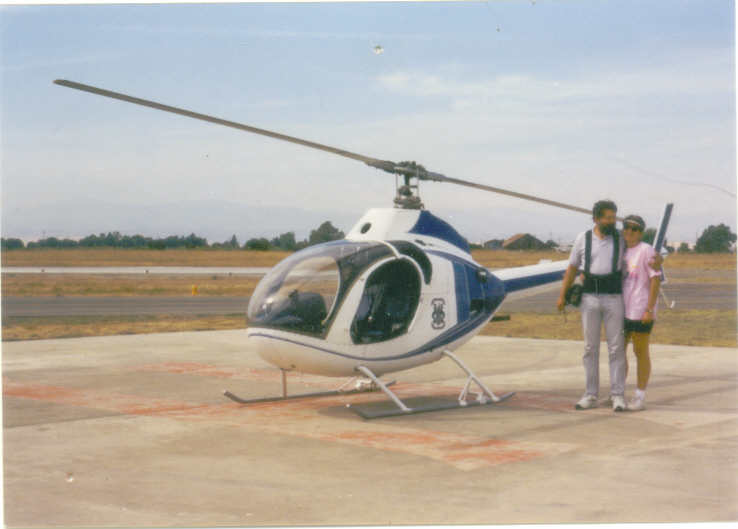
Many friends have been made over the years through contacts with other Rotorway builders. During the building of my helicopter I enrolled in the Rotorway pilot training program and found out what a challenge it was to get the hang of flying a helicopter. I was a fixed wing pilot and just knew that I would be flying that little factory Rotorway trainer within minutes, was I ever surprised! It took a lot of hard work just to learn to hover in one spot but by the end of the week of school I had accumulated 7 hours and my solo endorsement.
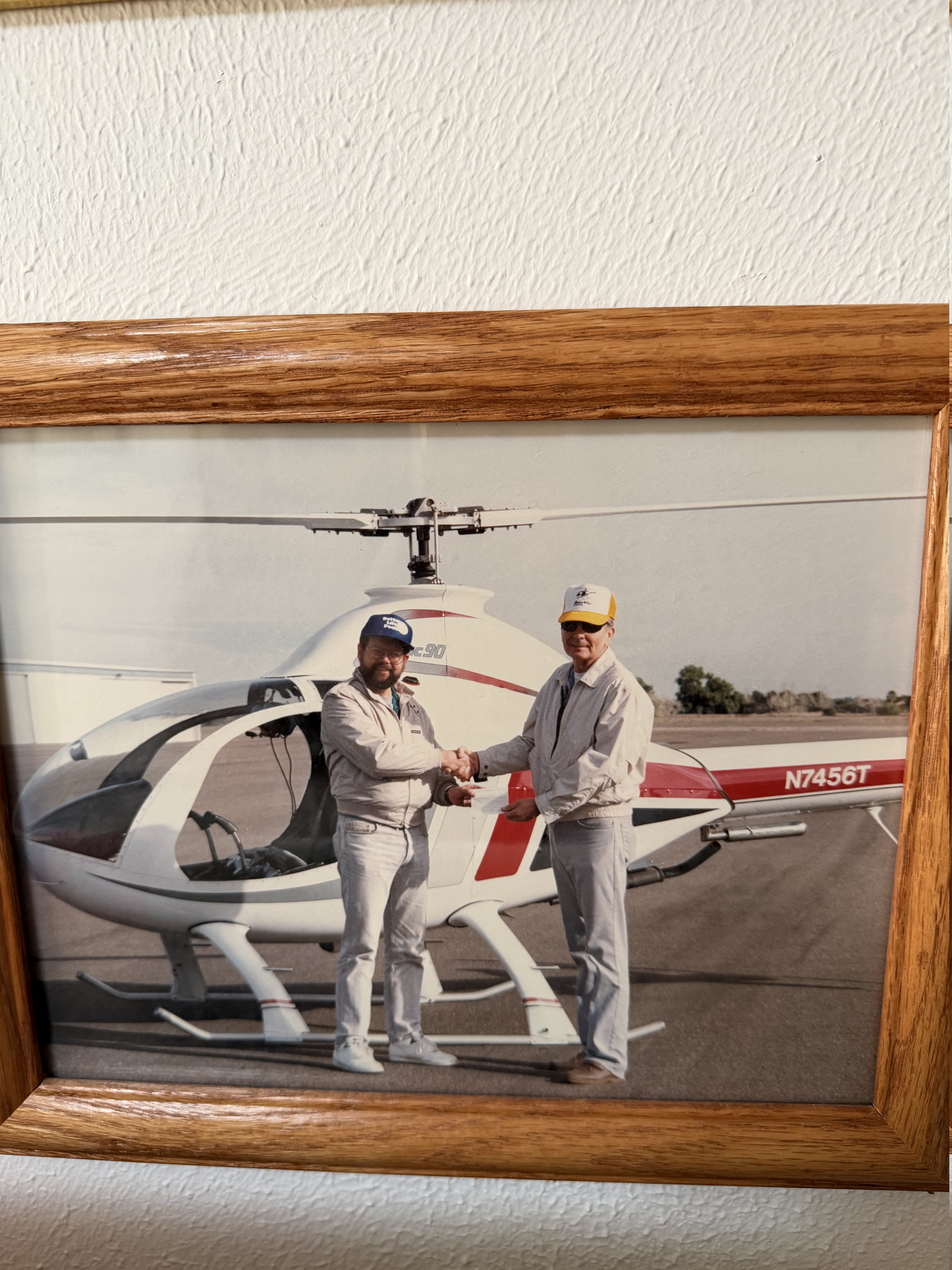
I went back to Rotorway for phase II training several months later and then a few months after that attended for phase III and my rotorcraft/helicopter rating. As it turned out I was the first person to complete all three phases of the Rotorway International flight school and for a number of years the photo of Stretch Wolter handing me my rating was hanging in the Rotorway headquarters. I was one of the few rated pilots in the Sierra Rotorcraft club at that time so I was able to spend many hours teaching other builders how to fly their helicopters, and I thoroughly enjoyed doing it.
I was told over and over that I should get my CFI rating and instruct with the authority to sign log books and give endorsements but I just never seemed to find the time to do it. Besides that I was having so much fun flying everyone else’s helicopters that I could not see going to school just so that I could sign their log books.
During those years the Sierra Rotorcraft club was very active and we did a lot of flying together. We would choose a location and agree to meet there the next month with our motor homes, vans, trailers, and of course our Rotorways. After work on Friday we would all drive from our respective homes and set up camp and rig our helicopters. There is just something special about waking up early in the morning after a good night sleep in the camper and hearing the Rotorway helicopter engines firing up and the slap of the main rotor blades beating air.
Soon the ramp, field, pasture, or parking lot was a beehive of activity with everyone anxious to be airborne and off on new adventures. This would go on for two days of flying, food, and fellowship. Several times we would awake in the wee hours of the morning to the sound of a heavy wind or rain and everyone would scurry out to insure that our precious Rotorways were secure and safe. I miss those days!
We moved from California in 1996 to the Ozarks of Missouri and here we built our own airstrip and helicopter training facility. Shortly after moving here I began working on my commercial rotorcraft rating and after that I really worked to earn my CFI rating. It has been a long time dream for me and now I am doing what I truly love to do, teach people to fly helicopters. I should add that in 1998 our Rotorway was stolen so we were without our helicopter, but life goes on.
There are a lot of new helicopter pilots out there and I thought that some of you might benefit from a few words from an old time Rotorway flyer. When I took my Phase II training at Rotorway we only did a couple of autorotation practices and then I was signed off or solo flight within my practice area. I returned home with my new solo-to-altitude endorsement and was anxious to get airborne. At this time I had around 50 hours of hover time on my Rotorway so I was pretty comfortable with it. I set my ballast weights correctly, did a very thorough preflight, used the restroom, checked the ballast weights again, and finally ran out of excuses. It was the hour of reckoning: this is what it was all about!!!
I was scared spit less! As I sat in my helicopter hovering at 24” altitude over the helipad, I felt real secure. What had my heart pumping and my body sweating was the thought of leaving the security of the hover and actually going high enough to get hurt and of being all ALONE without my flight instructor to make sure that I would be safe.
Finally I said to myself, c’mon wimp, go for it. The take-off was beautiful and I had flown for at least 40 seconds when out of the corner of my right eye I perceived a movement. Looking right I saw that the Velcro-attached seat cushion (they were about 12” square in those early ships) had become un-Velcro ed and was laying on the passenger seat. I immediately heard Stretch tell me “make sure everything in the cockpit is secure before flight so that nothing flies out the door and into the tail rotor”.
STAY! I thought as loud as I could, but that cushion had it’s own agenda. It slowly moved toward the door opening, I had to stop it but I was 200 feet in the air, what to do? First I tried holding the cyclic with my knees so that I could just very quickly grab the cushion, as soon as I released my death grip on the cyclic the helicopter dipped and I had to grab the cyclic back immediately. I next tried to stay in a left banking turn but the wind caught the cushion and out it went, I knew that I was dead meat. Miraculously the cushion missed the tail rotor and I was still flying.
At that time I did not have the skill level to fly the helicopter at low altitude while looking out the doorway for my seat cushion in the pasture below me. I made my approach to a hover and hovered around that pasture until I found the seat cushion, landed, secured the cushion under my butt, and took off.
I headed for home where my wife was still videotaping my first flight and I found that I still had a problem. You see, as all of the club members know, my property was only 150’ wide and I had only made landing approaches onto a runway at the Rotorway school, and that was around 2 miles long. Stretch always said, “keep that airspeed near 60 mph throughout your approach until you have to slow down, that way you are always ready with enough airspeed to do an autorotation and a flair in the very unlikely event that the engine should fail”.
I tried my first approach and ended up doing a beautiful low altitude fly-by, just missing the neighbors antenna in the process. This happened several times until I just slowed at around 100 feet, sorry Stretch, but I needed to use the restroom. I then just did a full power descending hover to the pad and parked it, my first every steep approach to landing. My wife told me that she got some great footage of my flybys and then wondered why I was sweating so profusely in the middle of January.
The thought that took all of the fun out of the solo flight without a flight instructor with me was "what if something breaks or quits, I have too much money and time invested in this helicopter to have it or me damaged". I think that this thought has occurred to most of us at times and is most likely the reason that we see so many Rotorways for sale with very low time on them. I decided right then and there that I needed more training in autorotations.
My good friend, the late Bill Cunningham, and Steve Lewis were at Rotorway for Phase II training. During a practice auto in which Bill was at the controls in the factory ship 56Tango, the instructor noticed that the engine had failed. The instructor took the controls and finished the auto, sans engine, to the runway. There was a problem though. This instructor had never done a touch-down auto in the Rotorway, only in Robinsons, and as usually happens the helicopter rocked forward and then onto it's left side totally destroying itself in the process.
This happened several times to the factory helicopters that I know of and is something that I did not want to experience with my ship. I should tell you that both occupants emerged through the kicked-out front windscreen without a scratch. Steve Lewis did show-and-tell at our next club meeting with the photos he took at the scene.
Knowing that I would not go back up any higher than a hover without proper autorotation training I began looking for an experienced Rotorway instructor. After many phone calls and references I found a flight instructor who had built two of his own Rotorway helicopters and was presently flying the surviving one. He had experienced an engine failure and while touring with his wife and after doing a beautiful autorotation and flawless run-on landing he crashed the helicopter, destroying it. It seems that after doing everything right the helicopter tipped up on the front of the skids and then rolled over onto the left side thrashing itself to pieces with the main rotor blades.
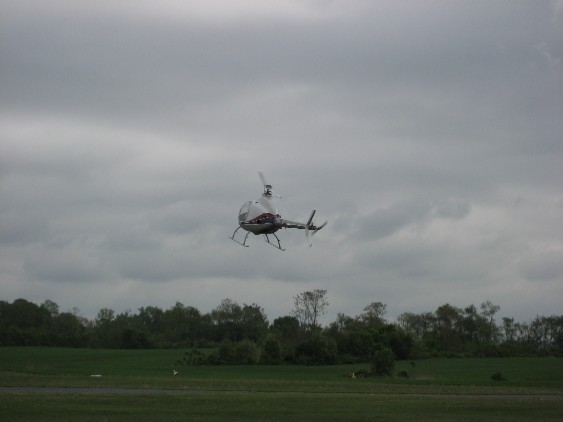
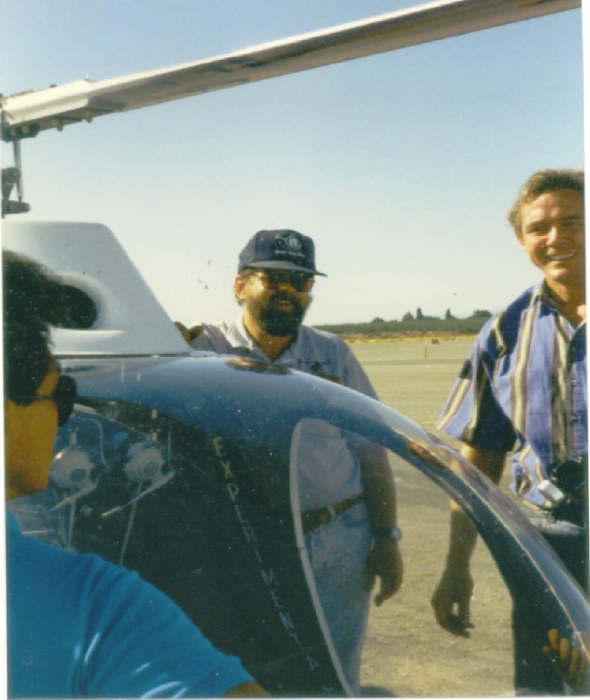
In this photo I am with my autorotation instructor Jim Sergesor next to my trusty old 152 Exec
This instructor was a friend of Bob Thorensen who was at that time Rotorways test pilot. Bob had numerous times performed touchdown autos with the Rotorways and without hurting himself or the ships. This flight instructor, Jim Sergaser, asked Bob how to do a proper ROTORWAY touchdown auto. Bob told him that Rotorway's had the nasty habit of wanting to rock forward (due to a high center of gravity and short front skid extension) and to the left when they contact the ground with any forward motion.
He said the "trick" was to repeat to yourself all the way down "make it stop!" The idea is that you need to hold your final flare at the bottom of the auto long enough to completely stop all forward motion of the helicopter before leveling the ship and then set it down with 0 mph ground speed. Without the forward motion the helicopter will not rock forward onto the skid tips and roll over.
Dan Van Duesen and I together hired Jim to teach us autorotations and we did hour after hour of them until they became second nature. About 6 months later the time came to prove the concept. Dan and I were flying Wayne Berry's beautiful Scorpion II and at about 250' altitude the engine quit. Jim's instruction to us paid off as we executed a 90 degree turn into the wind and set the little helicopter down without a scratch saying "Make it stop" all the way down.
We found that the single ignition Mallory coil had failed so I hiked home and got another one, installed it, and flew the helicopter home.
The practice procedure was to go up and do about an hour at a time of autorotations from 500 feet. When the flair was completed, the helicopter was leveled, and power was applied the forward motion of the helicopter should be Zero. With many hours of practice we just got better and better. It helps to have someone present initially that knows how to do a proper Rotorway autorotation so that they can critique your performance and give you pointers.
I made it a habit to do at least 5 autorotations each time I would go out for an hour of flying. I also was constantly aware that at any time I may need to actually do one for real, there is usually no warning, it just happens and you have about a second to react or you are in a heap of trouble. To date now with over 13,000 hours of Rotorway flying plus several thousand in other helicopters, I have had to execute 19 real to the ground autos.
When I attended the Helicopter Adventures Inc. flight instructor course it was very intense. They believe that every graduate of their flight instructor school should be an able enough an instructor to be qualified to teach in their own flight schools. We did no less than 50 to-the ground-autorotations. It is quite unnerving to take a perfectly flying helicopter and cut power, knowing that it is not coming back on unless you really mess up the procedure. We always landed into the wind and with several knots ground speed. I got pretty good at it, I thought.
Due to the FAA examiner going ground hog hunting during the time I was ready for the Practical CFI exam I elected to arrange to take it once I returned to Missouri, I knew where I could rent a helicopter for that purpose. After the 5 hour oral exam for the CFI rating I was ready to fly. The flight portion of the CFI practical test went without a hitch until the examiner asked me to land and he exited the helicopter prior to having me do the touchdown auto.
I had never done one in a Hughes 269B(HAI uses Schweizer 300CB’s), never in any helicopter solo, and to top it off the examiner wanted to view it from the ground and at a safe distance. As it turned out the Hughes 269B has low inertia blades compared to the 300CB. It is flown solo from the left seat while the Schweizer 300CB that I trained in is flown solo from the right seat so everything was a bit different. The other factor was that at HAI I always had performed the touchdown autos into the wind with my master instructor for ballast and on the day of the check ride here in Missouri the air was dead calm.
The examiner put two strips of white tape on the tarmac 30 feet apart and told me that my skids needed to end up between the two tapes or I would fail. He instructed me to do a straight in auto from 500'. I told him that I had never done a touchdown auto straight in, they were always 180 autos. In a 180 you can adjust your turn rate to end up at an exact spot.
I did the auto, but without the wind I was going too fast as I approached the 30 foot circle in which I was required to stop. To slow down I did a rather radical flair (ala Rotorway) and then leveled the helicopter with the collective firmly in the pocket. Before I could raise the collective I noticed that the helicopter was sitting squarely on the ground, no bounce, no slide, it had just rotated forward and set perfectly and lightly like a feather. I was a bit unsettled as I had not had the opportunity to complete my part of the maneuver because the helicopter had already landed and the collective remained firmly in the down position.
When I exited I was greeted by both examiners (I was honored to have an FAA examiner in training watching the entire test along with the examiner who was giving it) and the owner of the helicopter. They told me that it was one of the neatest and cleanest touchdown autos that they had seen and I was appropriately congratulated and passed on the PTS for Certified Flight Instructor Rotorcraft/Helicopter.
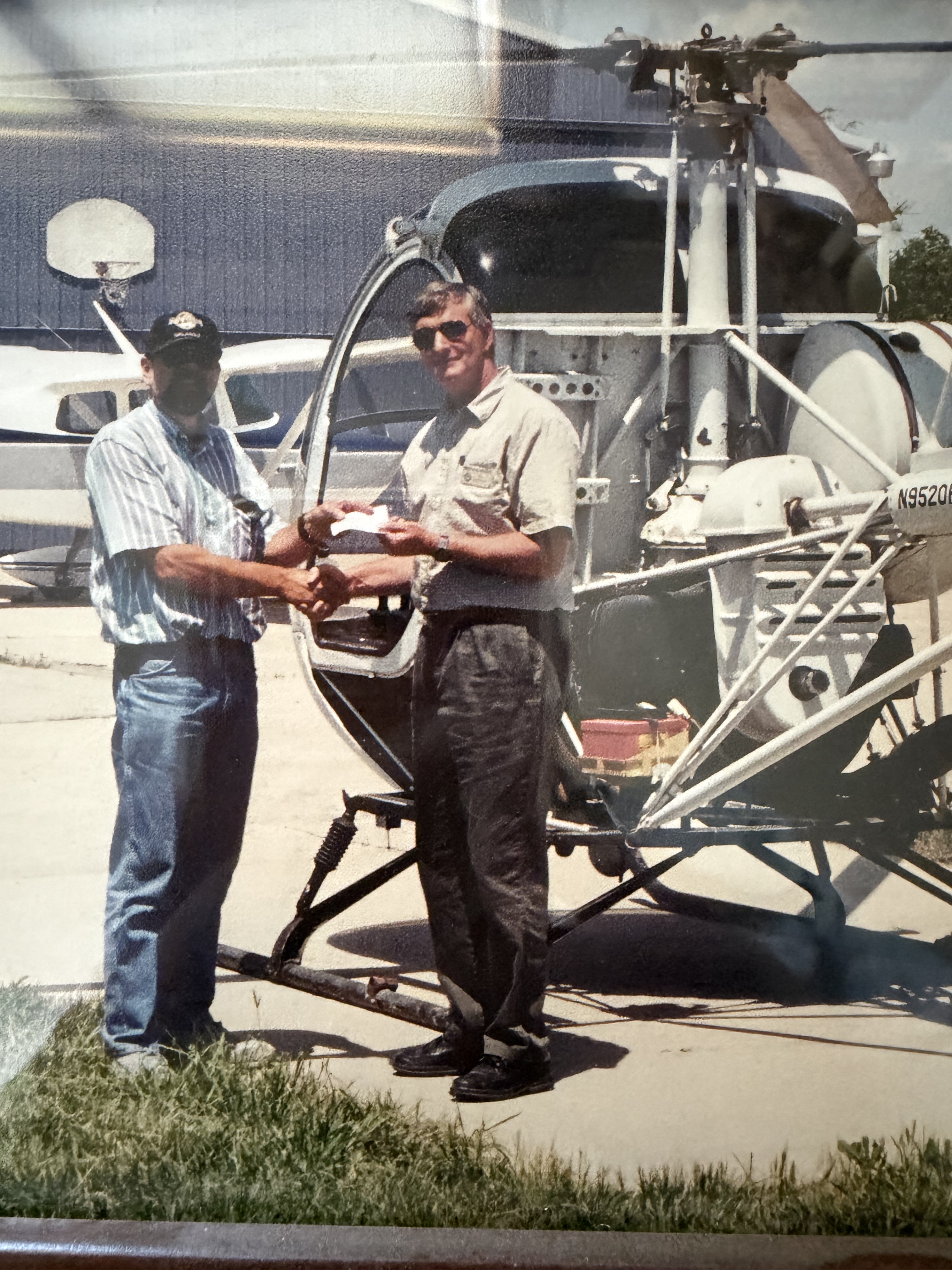
What actually happened was that although I was flying an unfamiliar helicopter from an unfamiliar position with no wind, once again my training took over when I needed it and the result was a near perfect Rotorway set-down with no forward motion. Some habits are hard to break and that is one that I will always stick with.
The real point is that you all have a small fortune tied up in your helicopters. Be sure to practice your autos until you feel very comfortable doing them and your power recovery flares are smooth and right. When you level off the helicopter should have "0" mph ground speed. Both Robinson and Schweizer teach that some ground run is acceptable but it is not quite the same in the Rotorway.
Always keep in mind, it is not "if an autorotation will be needed some day, but when". Always be ready for it, keep a landing spot within reach at all times, fly over open areas whenever possible and if not possible climb to an altitude that will allow a safe auto to a safe landing area. Train by doing practice autos regularly, and you, your passenger, and your helicopter will come out in one piece.
|
|
|
|
| Be careful where you land |
|
Posted by: Orv Neisingh - 08-17-2026, 04:27 PM - Forum: Orv Neisingh
- Replies (2)
|
|
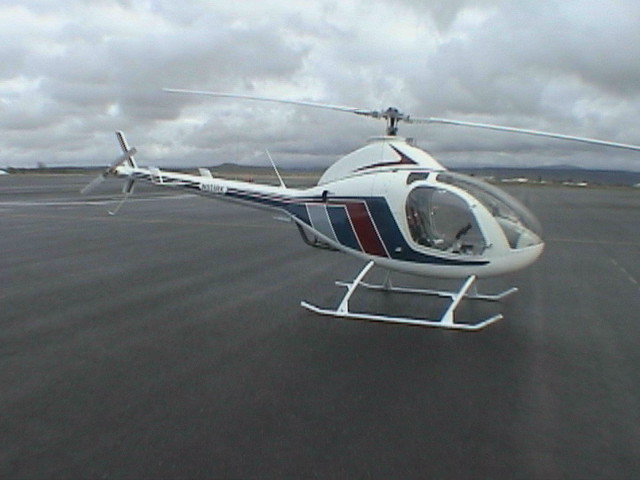
Quite a few years ago I was hired to instruct Bob K. in his newly built 162f. Bob told me that the helicopter needed to have the main rotors balanced and I had just purchased my new Pro-drive balancer and I was eager to try it out. John Spurling, who produced the balancer, this was befor Microvibe offered one to us, told me that if I had any questions, just give him a call.
I arrived at Bob's hangar and did a complete inspection of the helicopter, his workmanship was impeccable. After attaching the balancer sensors I fired up the engine and, sure enough, the main rotor system was really rocking the helicopter at idle RPM. I asked Bob if he had done a static balance and static lead/lag initial set up and he assured me that he had done them. As I increased the RPM, the helicopter began to shake even more dramatically to the point that I was afraid to take it to 100% RPM.
I called John Spruling and asked him if I could take readings with the helicopter still sitting on the ground and informed him about the very pronounced shaking. He told me to just bring it to 100% and lift off to get the first reading no matter how bad it was shaking. Well, John was the expert so I gritted my teeth, ran the helicopter up to 100% RPM, or at least it sounded like 100% because the helicopter was shaking so badly that I could no longer see the rotor tach. I pulled the helicopter into a hover and all I had to do was to use my index finger to push the button that I had velcroed to the cycle to get that reading except I had such a death grip on that gyrating cyclic control that I could not even loosen the grip of one finger to push the button.
At this point I thought that I was going to crash the helicopter but was finally able to get it back onto the asphalt pad safely. I still had no reading. I decided that once was enough of that kind of dangerous ride so I pulled out my rigging equipment and found that from the factory, the main blade rotor hub was off center by .007". That does not sound like much but the specs call for the hub to be centered on the main shaft to within .001". I reshimmed the rotor hub to spec and fired up the engine. This time the rotor system just purred smoothly and the reading in hover was around .2 IPS.
After Bob's hover training he wanted to land at his business location down town Oroville. He owned a large dental practice in town with a huge lot and acres of open space behind his building. He had secured the permission of the city to be able to fly in and out of his business property so we departed the airport and flew to his business.
We made a high recon and determined that there were no obstacles in our flight path. There was a McDonalds next door several hundred feet away from our intended landing spot and no pedestrians on his private property to be concerned with. We made our approach and landing, rolled the throttle down to idle and just then we were startled by two young boys on their stingray bikes just outside of the helicopter doorways. "Hey Mister, can we have a ride?". I grabbed the shirt of the boy closest to me and Bob grabbed the other one to keep them close to the helicopter as the rotor blades spun overhead.
The boys had been over at the McDonalds, saw us make our approach and headed our way. One of them rode his bike just behind the spinning tail rotor to come around to my side of the helicopter. Fortunately no one was hurt by I certainly learned a valuable lesson: helicopters are kid magnets and that I needed to be very vigilant to insure that no matter where I landed, no one was nearby.
Most cities now have ordinances that require public safety like the police or fire departments to be present for crowd control before a helicopter is allowed to land within their jurisdiction. In later years when I flew Medevac helicopters we would not land in a populated area without coordinating with the fire department or public safety at the scene to keep everyone safe.
|
|
|
|
|